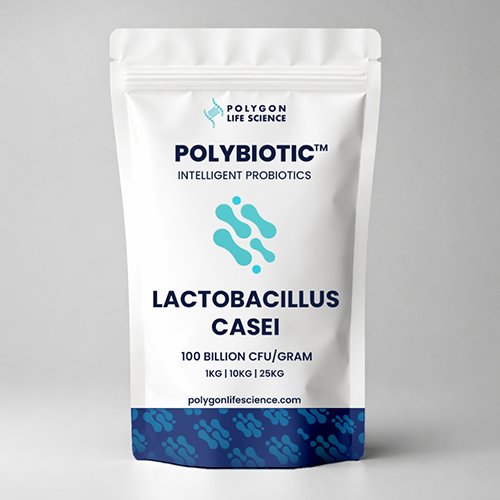
A well-established, Gram-positive, mesophilic bacterium known for its consistent fermentation performance and acid resistance. It grows optimally at 30–37 °C under facultative anaerobic conditions. Why it matters: It is a trusted industry strain for dairy products, probiotics, and microbiome-targeted formulations due to its reliability and proven health benefits.
Cat No. EG-B-LBC-1-1K
PRODUCT INFORMATION
I. Classification
Kingdom
Bacteria
Phylum
Bacillota
Class
Bacilli
Order
Lactobacillales
Family
Lactobacillaceae
Genus
Lactobacillus
II. Morphology
Gram-positive, non-spore-forming, short to elongated rod-shaped cells
occurring singly, in pairs, or in short chains
non-motile and lacks flagella
small, circular to slightly irregular, smooth, and creamy to off-white in appearance
III. PACKAGING & STORAGE
Packaging Type
Multi-layer Kraft-plastic bags
Shelf Life
Stable for 2 years
Storage Conditions
Stored at <25 °C, dry place protected from light and moisture.
Count
10⁹ CFU/g
IV. PACKAGING & PRESENTATION
Sizes
1 kilo
5 kilos
10 kilos
Lactobacillus casei
FEATURES AND KIENTICS
Supports gut microbiota balance
High-Quality
Affordable
Lab-Tested Product
Flexible Quantities
High-Volume Production Efficiency
Continuous Production Capability
Mechanism of Action
1
Pathogen Inhibition
2
Digestive & Metabolic Support
3
Immune Modulation
What's inside ?
Functional foods and beverages
GMO free
Flavor Free
Lactose Free
Gluten Free
ROS Free
Sterilized powder
Leading Probiotics, Powered by Science.
Unique strains with characterised mechanisms of action