
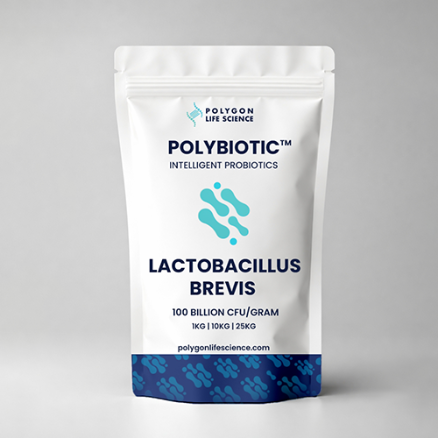
Lactobacillus brevis

( 221 )

Lactobacillus brevis
A Gram-positive, non-spore-forming, heterofermentative lactic acid bacterium belonging to the genus Lactobacillus, characterized by rod-shaped cells, facultatively anaerobic metabolism, and optimal growth at moderate temperatures (approximately 30–37 °C). The organism is known for its ability to produce lactic acid, ethanol, and carbon dioxide from carbohydrate fermentation and is widely used in food fermentation, probiotic formulations, and microbiological research due to functional health benefits.

Cat No. EG-B-LBB-1-1K

PRODUCT INFORMATION

I. Classification

Kingdom

 Bacteria

Phylum

Bacillota

Class

Bacilli

 Order

Lactobacillales

Family

Lactobacillaceae

II. Morphology


Gram-positive, non-spore-forming, short to elongated rod-shaped cells


occurring singly, in pairs, or in short chains


non-motile and lacks flagella


small, circular to slightly irregular, smooth, and creamy to off-white in appearance

III. PACKAGING & STORAGE


Packaging Type

Multi-layer Kraft-plastic bags


Shelf Life

Stable for 2 years


Storage Conditions

Stored at <25 °C, dry place protected from light and moisture.


Count

10⁹ CFU/g


IV. PACKAGING & PRESENTATION

Sizes


1 kilo

5 kilos

10 kilos 

Lactobacillus brevis

FEATURES AND KIENTICS

Helps maintain a balanced intestinal microbiota and improves digestive function.

High-Quality
Affordable
Lab-Tested Product
Flexible Quantities
High-Volume Production Efficiency
Continuous Production Capability

What's inside ?

Used in capsules, sachets, or functional powders

inside_image1

GMO free

inside_image2

Fragrance Free

inside_image3

Lactose Free

inside_image4

Gluten Free

inside_image5

ROS Free

inside_image6

Sterilized powder

Leading Probiotics, Powered by Science.

Unique strains with characterised mechanisms of action

Scientifically documented, forward-looking probiotic solutions

Premium probiotic products adapted to your market

Common Questions

Why are strain-specific properties important for L. brevis?

Different strains may vary in antimicrobial activity, acid tolerance, adhesion ability, and metabolite production, which directly affects their functional and clinical benefits.

How is L. brevis used in probiotic supplement formulations?

It is incorporated as freeze-dried powder in capsules, sachets, or functional foods, with viability expressed in CFU per gram or per serving.

What role does L. brevis play in fermented food production?

It contributes to fermentation through heterofermentative metabolism, producing lactic acid, CO₂, and ethanol/acetic acid, which improve flavor, texture, preservation, and safety of fermented foods.

Purchase Order