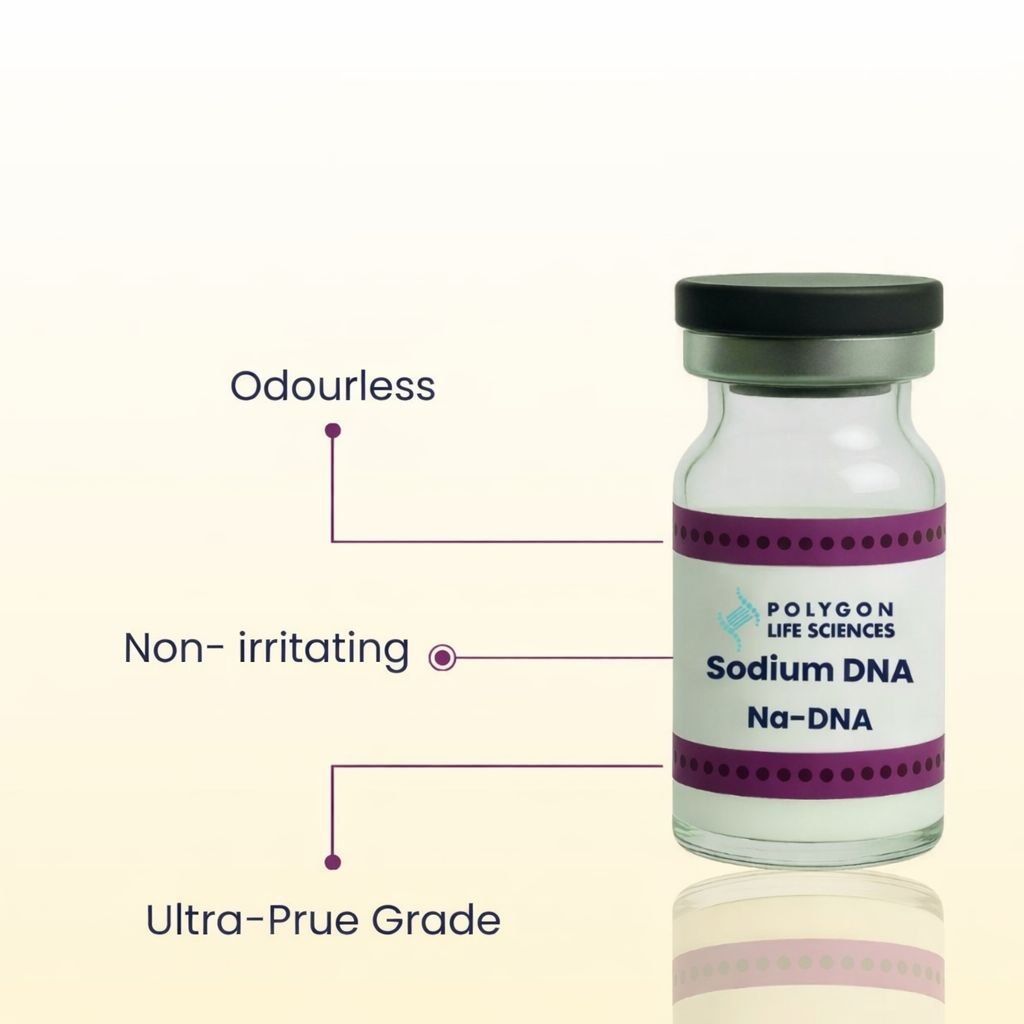
PDSNGL® (DNA-Na) is the sodium salt form of highly purified, depolymerized natural DNA (typically extracted from Salmon Oncorhynchus keta).
It appears as a fine, off-white to white powder. When reconstituted in sterile water or physiological buffer, it forms a clear, viscous solution. In cosmetics, regenerative medicine, and biotechnology.
Sodium DNA is valued for its polynucleotide content, which can support cell metabolism, tissue repair, and antioxidant defense.
Cat No. : EG-RM-SDNA-1-5 L
PRODUCT INFORMATION
I. TECHNICAL SPECIFICATIONS
Structural / Composition Data
Structure / Formula
Sodium salt of deoxyribonucleic acid (DNA)
Molecular Weight
~50 - 1,500 kDa (Mixture of fragments)
PDRN can be categorized into three molecular weight fractions:
Ultra Low
(50–100 kDa)
Low
(100–500 kDa)
Medium
(500–1500 kDa)
Appearance
White – Off White Powder
Concentration
99%
Solubility
Soluble in aqueous buffers
Form(s) Available
Lyophilized powder
Stability & Shelf Life
Storage
12 months at 2–8 °C, >24 months at –20 °C
Post-Reconstitution
6-12 months at 2–8 °C
Stability Notes
Protect from light
Quality & Compliance
QC Tests
Confirmed
Media
Buffer PBS
Documentation
Available on request
II. PREPARATION / RECONSTITUTION
General Guidance
Reconstitute with 100 mL sterile PBS.
Recommendations
Use within 8–12 hours refrigerated.
III. MECHANISM & BIOLOGICAL FUNCTION
Mechanism of Action
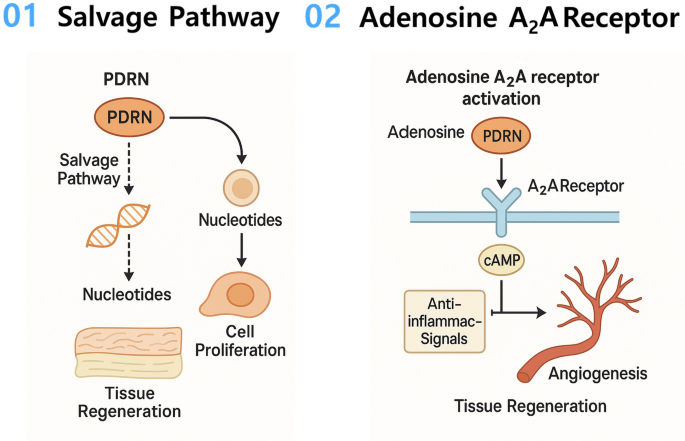
Provides nucleic acid building blocks for cellular processes. Can interact with cellular receptors and participate in various biochemical pathways depending on application.
Biological Claims
• Stimulation of hair growth
• Powerful Anti-Inflammatory Action
•Collagen Synthesis & Fibroblast Proliferation
• Stimulation of Angiogenesis (new blood vessel formation)
• Tissue Regeneration & Wound Healing
IV. APPLICATIONS
Intended Uses
Targeted drug delivery systems
V. PACKAGING & PRESENTATION
Sizes
1-5 liter
PDSNGL® Na
FEATURES AND KIENTICS
This Sodium DNA is a multifunctional skincare enhancer. it offers a blend of hydration, skin support, and formulation flexibility. Perfect for modern skincare formulations, it delivers both performance and gentle care.
High Purity Polynucleotides
Biocompatible & non-immunogenic
Odorless and stable
Suitable for all skin types
Versatile Ingredient
Fast Absorbing Formula
Mechanism of Action
1
PDRN binds to adenosine A2A receptors
2
Initiating a cascade that raises intracellular cAMP levels.
3
PDRN provides ready-made deoxyribonucleotides that act as building blocks for DNA repair
What's inside ?
Sodium DNA is essentially a purified, depolymerized DNA fragment mixture (polynucleotides of varying lengths) where the phosphate groups are paired with sodium ions. It does not contain proteins, sugars, or lipids — it’s just nucleic acid fragments in salt form.
Sodium DNA – A purified, water-soluble form of DNA salt.
Sourced from high-quality salmon DNA.
Depolymerized Chains – Designed for optimal skin absorption.
What is Sodium DNA and how is it different from regular DNA?
Sodium DNA is highly purified from Salmon Salar, depolymerized DNA that has been converted into its sodium salt form. and then processed to create shorter, uniform fragments called polynucleotides.
This makes it more soluble, more stable, and easier to formulate than high-molecular-weight “regular” DNA extracted directly from cells.
Is Sodium DNA biocompatible and non-immunogenic?
Yes. When produced under cosmetic or medical-grade standards, Sodium DNA is considered biocompatible and largely non-immunogenic. Because the polynucleotide fragments are naturally occurring and low in protein or endotoxin contaminants, the body generally recognizes them as nucleic acid building blocks rather than as foreign antigens. This is why Sodium DNA is widely used in topical, injectable, and regenerative formulations without triggering immune reactions.
How does Sodium DNA work at the cellular level?
Once applied or injected, Sodium DNA fragments:
Provide raw materials for cell metabolism, DNA/RNA synthesis, and energy pathways.
Activate cell receptors (e.g., purinergic receptors such as A₂A) and signaling pathways that promote fibroblast proliferation, collagen production, angiogenesis, and anti-inflammatory responses.
Together these effects help support tissue repair, improve skin regeneration, and reduce oxidative stress at the site of application.